
What Questions Should Leaders Ask to Build a Dream Team?
If you’ve been watching the Winter Olympics, you’ve felt the tension of waiting for the scores, the joy of watching a flawless performance, and the shock when a favorite falters under pressure — from Alysa Liu’s transcendent skate to Lindsey Vonn’s high-speed crash.
The Olympics remind us that operating at a high level of performance is fragile. It’s physical. It’s mental. And most importantly, it’s deeply human. It requires extraordinary preparation to compete at that level.
Performance at that level doesn’t happen by accident — which brings me to another legendary Olympic team: the 1992 “Dream Team.”
Are you building a Dream Team?
Remember the 1992 “Dream Team”? The team with legendary players like Michael Jordan, Charles Barkley, and Magic Johnson, which took the Olympics by storm, defeating their opponents by an average of 44 points per game. The Dream Team has now become a go-to name in describing a supercharged, high-performing team.
Every team leader wants their team to be the Dream Team.
But what does it take?
Psychological safety– full stop.
Too often, however, people experience the opposite at work. And when that does happen, not only does the individual suffer, but so does the entire team.
The natural response to a lack of psychological safety is self-protection. This seemingly innocuous act is in fact a huge suck of energy—for the individual and for the team. It means that the energy that would otherwise have gone toward the team's performance instead goes toward the individual protecting themselves.
It’s a lose-lose proposition. So, where do we go from here?
A Safe Harbor Starts With the Manager
Every manager is uniquely positioned to create what I call a “Safe Harbor” within the team.
Especially in a high-risk environment, psychological safety is paramount. Moreover, it’s foundational in ensuring team performance, as well as increasing the likelihood that team members will step forward if they are in distress.
And perhaps one of the clearest examples of this played out on the world stage. When Simone Biles stepped back from Olympic competition to protect her mental and physical safety, she did something countercultural in a performance-obsessed environment. She demonstrated that high performance and psychological safety are not opposites—they are intertwined.
That’s what a Safe Harbor looks like.
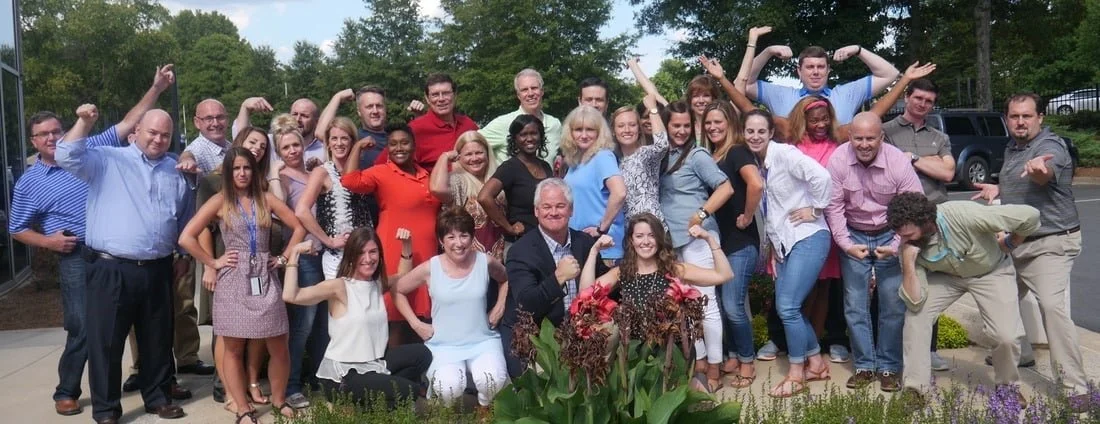
Managers & Leaders at Healthstat adopt their favorite power pose during a Managers on the Move Workshop.
Think, Build, Get
To build the Dream Team, your calls to action are to Think, Build and Get.
Think about VUCA.
The first step in creating a Safe Harbor is to think about VUCA—volatility, uncertainty, complexity and ambiguity. It goes without saying that we are living in a world of VUCA—global pandemics, wars with no end, economic distress, and political tensions. Pausing to think about the impact of this is critical.
It’s worth asking:
How is this level of volatility impacting my team right now?
Where might uncertainty be causing people to hesitate?
Build psychological safety.
Especially in the face of VUCA, psychological safety is vital.
An environment that is psychologically safe is one in which it’s safe to speak up; it’s safe to ask a question; it’s safe to point out an error; it’s safe to say, “I’m not OK and I need help.” Candor is expected and workers can speak up without fear of retribution or humiliation.
Building it requires leaders to ask:
Is there anything we’re not saying that we need to?
Where do you feel most supported — and where do you feel alone?
Get into the zone.
To be clear, psychological safety is NOT about “being nice” or “slacking off.” As a team leader, you definitely still want to hold people accountable. The question really is about balance.
How can you balance accountability with holding space for people to feel safe in speaking up?
Questions to consider:
What does respect look like in our conversations?
When things get tough, what do you need from me?
That’s the art of getting into the zone–the Performance Zone.
Safe Harbors start with the managers.
And it starts with the questions they choose to ask. If it were truly safe to speak on your team, what would people be saying? And what question will you ask this week to make that possible?